Wastewater Management
The single largest source of wastewater in oil palm milling operations is palm oil mill effluent (POME) which is in the form of viscous and thick brownish suspension liquid. On average, about 0.5m3 of POME is produced from processing one tonne of FFB.
If it is left untreated prior to discharging into watercourse, POME is gravely polluted with unacceptably high contents of biochemical oxygen demand (BOD) and chemical oxygen demand (COD). Therefore, despite a non-toxic waste constituted by nutrient-rich and moderately bio-degradable substances, POME poses environmental threat because of its vast oxygen depleting capacity detrimental not only to ecological equilibrium of underwater creatures but also to human consumption.
While contributing towards economic development of the country by adding value to FFB through its conversion into oil palm products, and by providing employment opportunities to local population in raising personal as well as national income, the Group does not lose sight of the requirement for a sound, sustainable and scientific system of managing wastewater in a way that protects aquatic life against perilous contamination and deterioration of quality of waterways.
POME TREATMENT
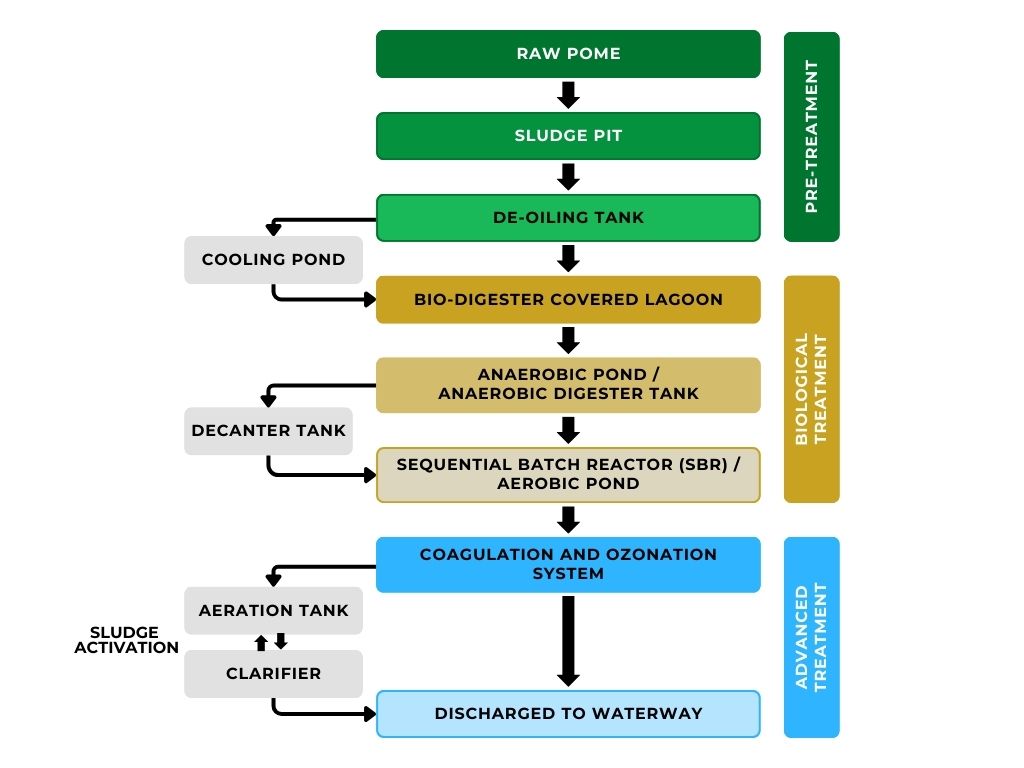
Wastewater treatment of POME by CPO mills of the Group undergoes broadly 3 systematic phases:
PRE-TREATMENT
BIOLIGICAL-TREATMENT
ADVANCED TREATMENT
PRE TREATMENT
The pre-treatment phase involving stabilization stage of cooling off the heated liquid in cooling pond or sludge pit for lowering temperature down from 85°C to 55°C approximately before removal by a separator installed in de-oiling tank of oil, grease together with such pollutants as sand or grit.
BIOLOGICAL TREATMENT
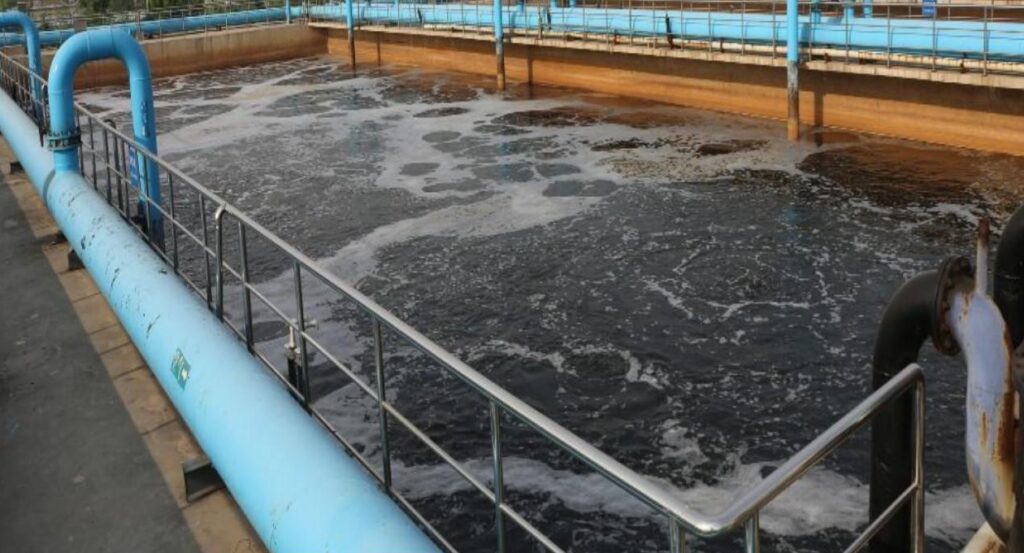
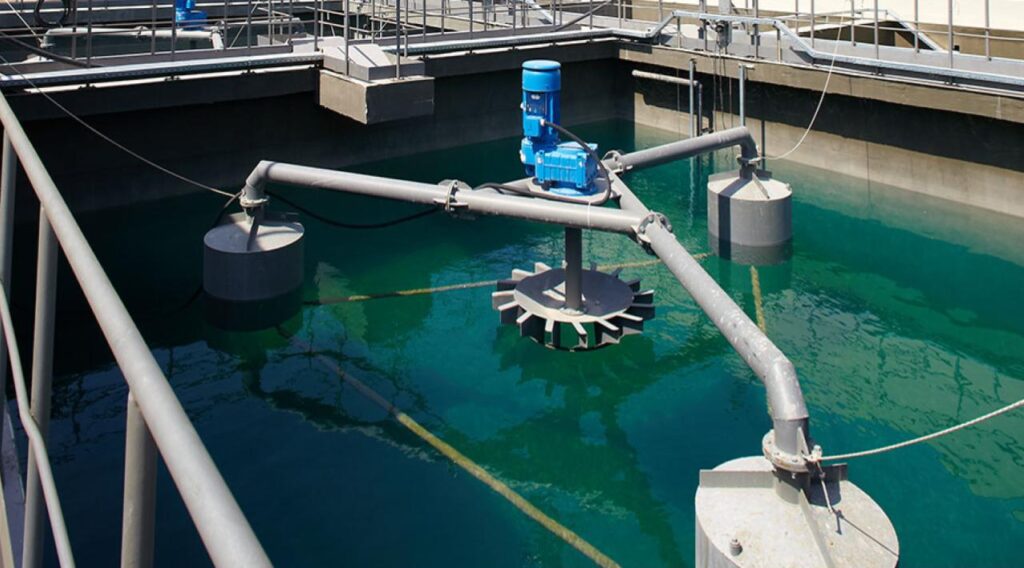
The biological treatment phase via integration of bio-digester covered lagoon, anaerobic digester tank and a series of ponding system undergoing 3 biological processes of anaerobic, facultative and aerobic decomposition; this phase involves capturing biogas by relying on metabolic activities of bacteria for breaking down organic matter, to be followed by aeration process in which bio-degradation of contaminants by microorganisms is strengthened for expediting reduction of COD and BOD.
Advanced TREATMENT
The advanced treatment phase through biochemical means including sequencing batch reactor (SBR), coagulation-flocculation and ozonation in which the discarded elements particularly BOD, COD and total suspended solids (TSS) are eradicated radically to standard dischargeable limits permitted by the Department of Environment Malaysia; as a reinforcement prior to release, the process of sludge activation may be performed with the help of a clarifier that acts as a screening device to filter out any waste or minute sludge filtrates before the fully treated POME liquid is safely and finally discharged into waterways.
Quality of Discharged POME
The thoroughness in eliminating excessively unwanted pollutants and contaminants is ensured after purifying POME through preliminary, biological and advanced stages, with the desirably end result that the outlet parameters of POME released by the Group into watercourse can achieve reasonably and consistently the following regulatory limits:
| Discharged Parameter | Reading |
|---|---|
|
BOD |
Up to 20 ppm |
|
Suspended Soils (SS) |
Up to 50 ppm |
|
Ammoniacal Nitrogen (AN) |
Up to 20 ppm |
|
Oil & Grease (O&G) |
Up to 5 ppm |
|
pH Value Range |
5 to 9 |
|
Temperature |
Up to 45 Degree Celcius |