

GHG Emissions Reduction
Methodology of GHG Emissions Reduction
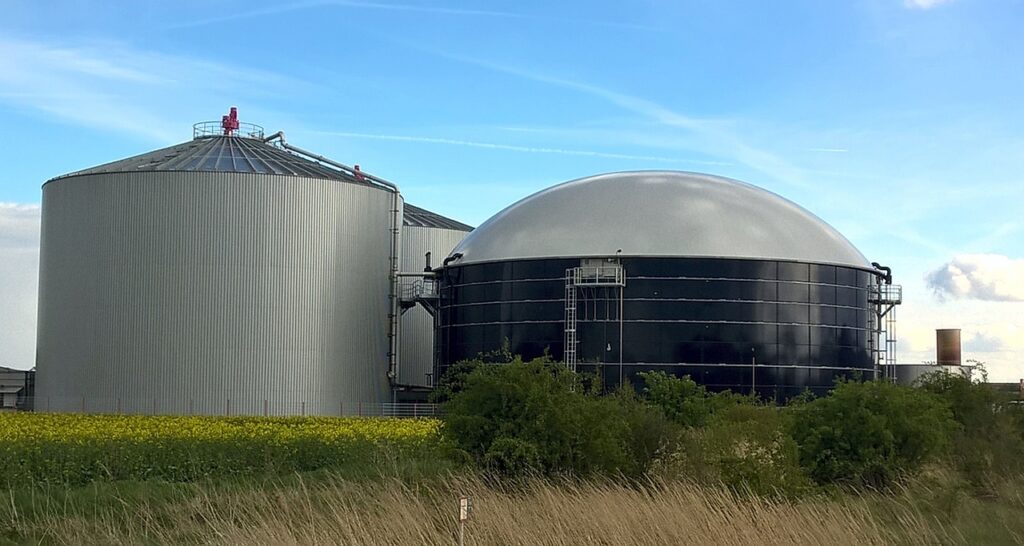
Biogas as Primary Source of GHG Emissions
Biogas composes of predominantly methane (CH4) and carbon dioxide (CO2) gases, a sizeable amount of water vapour (H2O) together with traceable volumes of hydrogen sulphide (H2S), hydrogen and ammonia.
Biogas is produced in the absence of oxygen from anaerobic treatment of palm oil mill effluent (POME) in which organic materials are digested by bacteria.
CH4 contributes more to greenhouse effect in raising global temperature than CO2 does.
Functionality of Biogas Plant
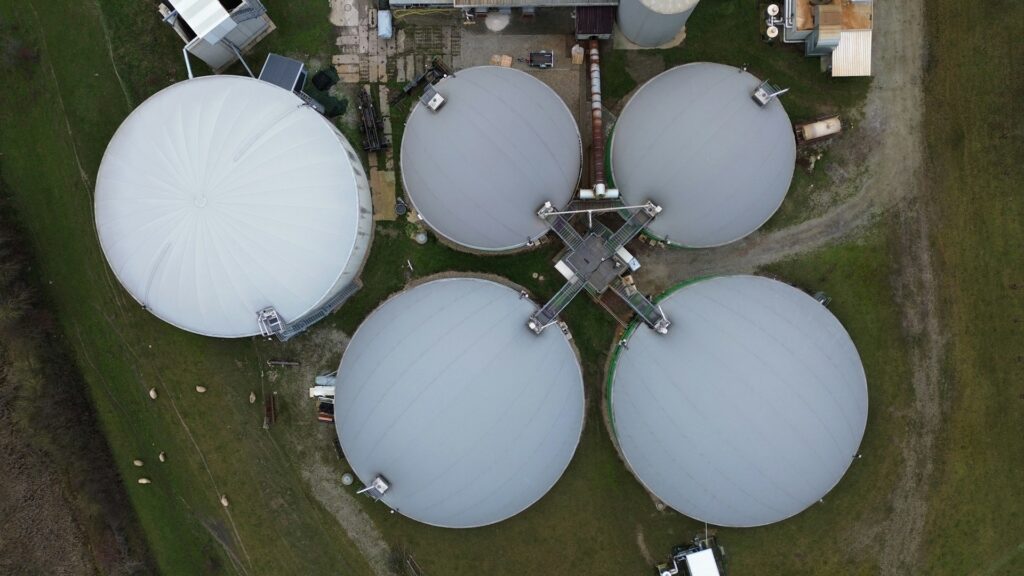
The Group endeavours to minimise the release of biogas into surrounding airspace for the purpose of withholding and converting CH4 into grid electricity for sale.
This energy conversion process is operated through a biogas plant jointly owned by the Group and a 3rd party company.
Besides reducing GHG emissions, the biogas plant also helps to augment revenue generating capacity of the Group.
SCHEMATIC DIAGRAM of BIOGAS PLANT OPERATION
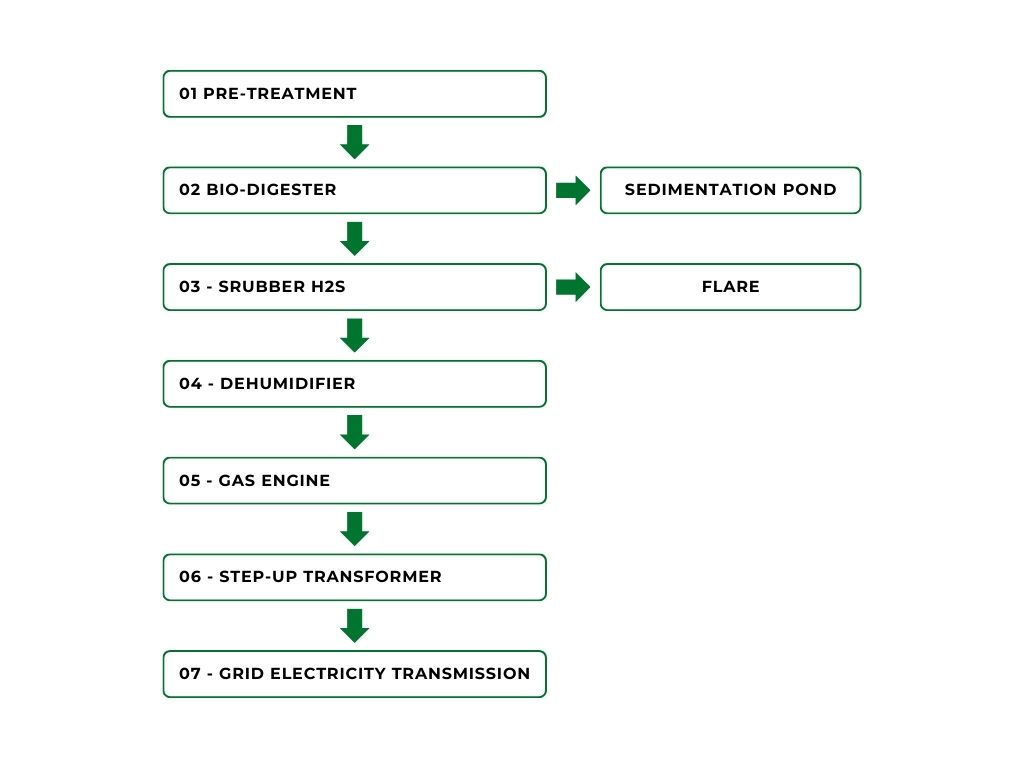
03-A
FLARE
For safety reason, the flare is installed to burn off excess biogas if its production volume exceeds the maximum flow of it allowed to enter gas engine.
Sometimes when the gas engine is offline for maintenance or repair, biogas has nowhere to go but to be released by means of burning or flaring it.
04
Dehumidifier
A gas dehumidifier is used to reduce moisture content by extracting water vapour out of biogas in readiness for its input to gas engine.
In this way, combustion function in gas engine is optimised through prevention of condensation and protection of gas engine against acid formation from reacting water with H2S and oxygen.
A high-quality biogas of low humidity level will promote engine efficiency and economise biogas fuel consumption.
Accounting for GHG Emissions Reduction
The United Nations’ Framework Convention on Climate Change has recognised biogas plant as a Clean Development Mechanism (CDM) used for capturing GHG from emission into environment. In order to quantify reliably the reduction of GHG emissions contributed by biogas plant, the Group applies the following standard equation which is consistent with the recommendation of Malaysian Green Technology Corporation (MGTC) on CDM Electricity Baseline that guides the calculation of Certified Emission Reduction (CER) achievable from implementing biogas power plant.
Emissions Reduction (ER)
= Baseline Emissions (BE) – Project Emissions (PE)
- Emissions from releasing methane into atmosphere; and
- Emissions from electricity generated by grid-connected power plant.
- Emissions from electricity consumed to capture and burn methane gas;
- Emissions from burning methane gas; and
- Emissions from captured but unburnt methane – usually taken as 10% of captured methane.